Interested In This Footage?
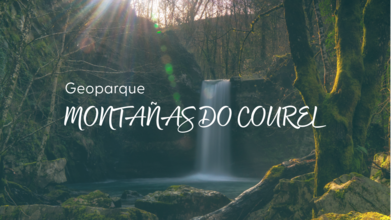
Geoparque Montañas do Courel
- 10 months ago
- 346 VŪZ
8 


- 8
- Report
Twenty-four viewing points, five museums and interpretation centres and 189 km of trails are the best option for exploring the Courel Mountains. The Geopark offers a unique opportunity to discover its unique geology and amazing biodiversity, where humans have lived since prehistoric times. White quartzite and dark slate make up the vastness of the Geopark's Paleozoic rocks, once deformed by large folds like the Campodola Natural Monument, of international interest. Inside the rocks you can see fossils that are more than 300 million years old, while on them you can walk through the narrow river valleys and climb the steep slopes to discover the legacy of ancient glaciers. All this while enjoying native forests of chestnut, oak and birch trees, whose colour varies with the seasons, and which coexist with beech, oak and a great variety of orchids that love calcareous soils. At its feet, there are kilometres of caves inhabited by cave bears in the past. However, in the south you will be surprised by our more Mediterranean olive trees, cherry trees, orange trees and cork oaks.The Courel Mountains witnessed the arrival of the Romans 2,000 years ago, whose astonishing legacy includes 66 forts, 99 gold mines and more than 5 km of water channels. Also noteworthy is a large Roman bridge and a tunnel dug to divert the Sil River. Gold gave way to castles, abbeys and churches, many of them built with exotic local stones or even brought from far away. Metals such as iron and antimony enriched our ancestors, leaving us an exceptional mining heritage. Without a doubt, the Paleozoic Villages Route is the best way to get to know first-hand the traditional architecture of our mountain villages, with stone walls and roofs, and wooden balconies and passageways. Flour mills, chestnut drying sheds and lime kilns that supported the most rural economies are still standing and in stone, while today fine slate is used to cover the roofs of half of Europe. You cannot leave without tasting the rich local cuisine and the unique flavours of our wines, oils, chestnuts, honey and fruits such as cherries. The beehives were always surrounded by magnificent stone constructions to protect them, among other things, from brown bears, who have returned to stay forever in the Courel Mountains.
Up Next
Viana do Castelo 🇵🇹

- Airviewstudio
- 708 VŪZ
6 - 6
- 9 months ago
Viana From Above
- Airviewstudio
- 694 VŪZ
6 - 3
- 4 months ago
Summer in Portugal
- Airviewstudio
- 806 VŪZ
5 - 4
- over 1 year ago
Costa Norte 2 🇵🇹
- Airviewstudio
- 1.2k VŪZ
7 - 7
- about 2 years ago
Macizo Central Orensano
- Airviewstudio
- 504 VŪZ
6 - 4
- about 2 years ago
Val do Navea
- Airviewstudio
- 506 VŪZ
8 - 8
- 8 months ago
GALICIA NATURAL | SEIMEIRA DE VILAGOCENDE | PEDREGAL DE IRIMIA
- Airviewstudio
- 962 VŪZ
8 - 6
- about 2 years ago
Mirador de Cotorredondo | Costa da Vela
- Airviewstudio
- 620 VŪZ
4 - 2
- almost 2 years ago
Monte Louro
- Airviewstudio
- 534 VŪZ
7 - 6
- about 2 years ago
🎬 El Mejor Paisaje Capturado Con Un Dron

- DronePilot01
- 694 VŪZ
4 - 4
- over 4 years ago